
Welcome!
BowWow Fun Towne is open 7 days a week for all services
BowWow Fun Towne provides doggie day care, boarding, puppy preschool, do it yourself dog washing tubs and indoor swimming pool just for our canine companion. We are taking extra precaution to keep everyone safe and healthy. Face covering is not required but if you prefer, you are welcome to grab one before you enter.
BowWow Fun Towne has gone to the dogs… We are a doggie daycare where a dog can be a dog.
At BowWow Fun Towne your dog will enjoy spending time with his/her friends, getting great exercise and being cared for by human friends who love dogs and enjoy interacting with them. While you’re gone, you can rest assured that your dog is not only happy, but feels secure and is continuously receiving positive reinforcement and training throughout the entire day.
We believe the goal for the best doggie daycare should be to provide both physically and mentally stimulating activities for your pup…to keep him active and learning throughout the day.
BowWow Fun Towne is your local neighborhood dog day care where your canine pals from many locations: Brier, Kenmore, Lake Forest Park, Bothell, Lake City, Kirkland, Mountlake Terrace, Shoreline, Edmonds, Lynnwood, Seattle & more! We provide the following services: dog day care, boarding, self wash, full service grooming, doggie swimming pool and a pet store — BowWow Fun Towne is a total care facility for your very best friend!
Welcome!
Read our latest News:
Dog Communication
Is Your Dog Trying To Tell You Something?
“Dogs do speak, but only to those who know how to listen.” –
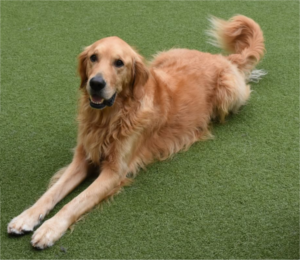 Your dog may not be able to speak your language, but he is constantly communicating with you. From the way holds his tail to the expression on his face, your dog uses body language, sounds, and behavior to tell us how he is feeling.
Learning to recognize these signals can help you better understand your dog and strengthen your friendship.
Here is what to pay attention to…
Notice Your Dog’s Tail – A dog’s tail can provide important clues about their emotions, but a wagging tail doesn’t always mean a dog is happy.
- A relaxed, gently wagging tail often indicates a comfortable dog.
- A fast wag may show excitement.
- A stiff, high-held tail can indicate alertness or tension.
- A tail tucked closely between the legs may signal fear or anxiety.
- However, every dog is different, so it’s important to consider the situation and your dog’s overall body language rather than relying on the tail alone.
Watch His Ears – Your dog’s ears can also reveal how he is feeling.
- Relaxed ears usually indicate that your dog is comfortable.
- Ears pointed forward may mean your dog is interested in something.
- Ears pulled back can signal fear, uncertainty, or discomfort.
- Dogs with floppy ears can be harder to read, so look for changes in their usual ear position and combine that information with other signals.
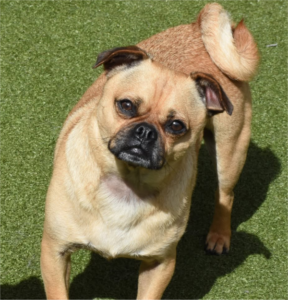 Learn to Read His Eyes – Your dog’s eyes can say a lot without making a sound.
- Soft, relaxed eyes generally indicate that your dog is comfortable.
- Wide eyes, especially when you can see more of the whites around them, may suggest fear or stress.
Avoid assuming that direct eye contact always means confidence. In some situations, staring can be a warning sign that a dog feels threatened or uncomfortable.
Understand His Body Position – A relaxed dog often has a loose, wiggly body. When your dog is comfortable, their movements may appear easy and natural.
A stiff or frozen body can tell you something very different. If your dog suddenly becomes rigid, particularly when another person or animal approaches, they may be feeling nervous, threatened, or protective. Giving them space can help prevent the situation from escalating.
A dog that rolls onto their back isn’t necessarily asking for a belly rub, either. Sometimes this position is a sign of submission or anxiety. Pay attention to the rest of their body language before reaching down to pet them.
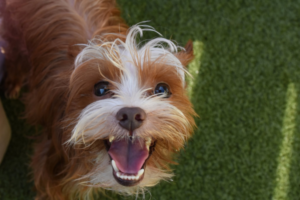
Listen to His Sounds – Barking, whining, growling, and even sighing are all forms of communication.
- Dogs bark for many reasons, including excitement, boredom, fear, or alerting you to something unusual.
- Whining may indicate that your dog wants attention, is anxious, or needs something.
- A growl should not automatically be viewed as “bad” behavior. It is often your dog’s way of communicating discomfort or asking for space.
- Punishing your dog for growling can remove an important warning signal without addressing the underlying problem. Instead, try to understand what caused the behavior and give your dog appropriate space.
Notice Changes in Behavior – Sometimes the most important message is a change from your dog’s normal behavior.
- If your dog is normally energetic and becomes withdrawn, if your dog is friendly and begins avoiding people, or if your dog suddenly becomes unusually vocal, he may be trying to tell you something.
- Behavioral changes can sometimes be related to stress, fear, pain, or illness. If a change is sudden, persistent, or concerning, contact your veterinarian.
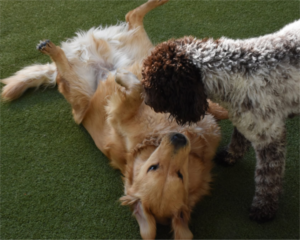 Notice What’s Going On – The best way to understand your dog is to look at the whole picture.
- Don’t interpret one signal by itself. Consider your dog’s tail, ears, eyes, posture, sounds, and the situation around them.
The more time you spend observing your dog, the easier it becomes to recognize their individual communication style.
Building a Stronger Connection…
Learning what your dog is trying to tell you isn’t just about preventing problems. It is also about building trust. When you recognize when your dog is happy, nervous, excited, or uncomfortable, you can respond appropriately and help him feel safe.
Your dog may never say “I love you” with words, but he communicates it in countless ways. As you learn his language, you will “listen” more closely—and become an even better companion to your four-legged friend.
At BowWow Fun Towne…
Dogs are our business, and our friends, and we understand how important your dog is to you.
BowWow Fun Towne offers puppy socializing, in home training, and boarding options
We are experts in dog day care, we care about your dogs and take their health and well-being seriously. Our facility features a full size swimming pool for fun and exercise.
